How robots sense, decide and move
Every robot follows the same loop: sense, decide, act. Here is how each part works.
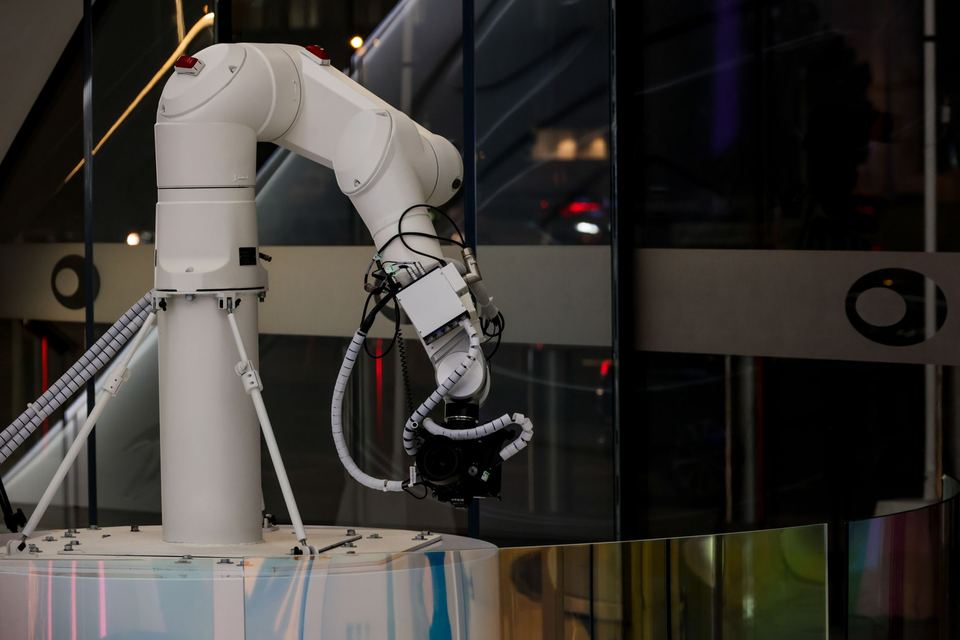
The sense, decide, act loop
Almost every robot, from a robot vacuum to a factory arm, repeats three steps many times per second.
Sense
Sensors measure the world: cameras see, distance sensors detect obstacles, encoders count wheel turns and other sensors measure force, light or temperature.
Decide
A controller turns sensor data into a plan. It can be a simple rule ("if there is a wall, turn") or a program that uses AI to recognise objects and choose actions.
Act
Actuators create movement: electric motors, servos and other mechanisms. Good control makes the movement smooth and accurate.
Where AI fits
AI helps robots handle messy, real-world input, such as recognising an object in a camera image, which is hard to describe with fixed rules.
Why build one
Programming a robot is a hands-on way to learn electronics, code and problem solving at once. You see your ideas move in the real world.
Learn it hands-on
Our course Robotics and AI takes you through this step by step, with real exercises. Message us on WhatsApp at +212 607 740 464 and we will create your account.